Making do has a long history
Reuse is not a modern trend. Japanese households have long wrapped gifts in furoshiki, square cloths that are untied and used again. The visible mending traditions of sashiko stitching and patched boro textiles turned repair into beauty. The philosophy behind kintsugi, which mends broken ceramics with lacquer and gold, celebrates an object's history rather than hiding it. Genuine kintsugi uses urushi lacquer and needs training, so treat it as inspiration rather than a weekend project.
Closer to Christmas, Victorian families decorated trees with die-cut paper "scraps" saved in albums, and Mexican tinsmiths in the hojalata tradition have punched patterns into recycled tin for generations. Even the glassblowers of Lauscha in Thuringia, often credited with the first glass Christmas baubles, began in a culture of thrift and small household workshops.
Group mismatched reused items by colour rather than type. Six different jars all wrapped in the same kraft paper silhouette read as a deliberate set.
Sourcing from your own home
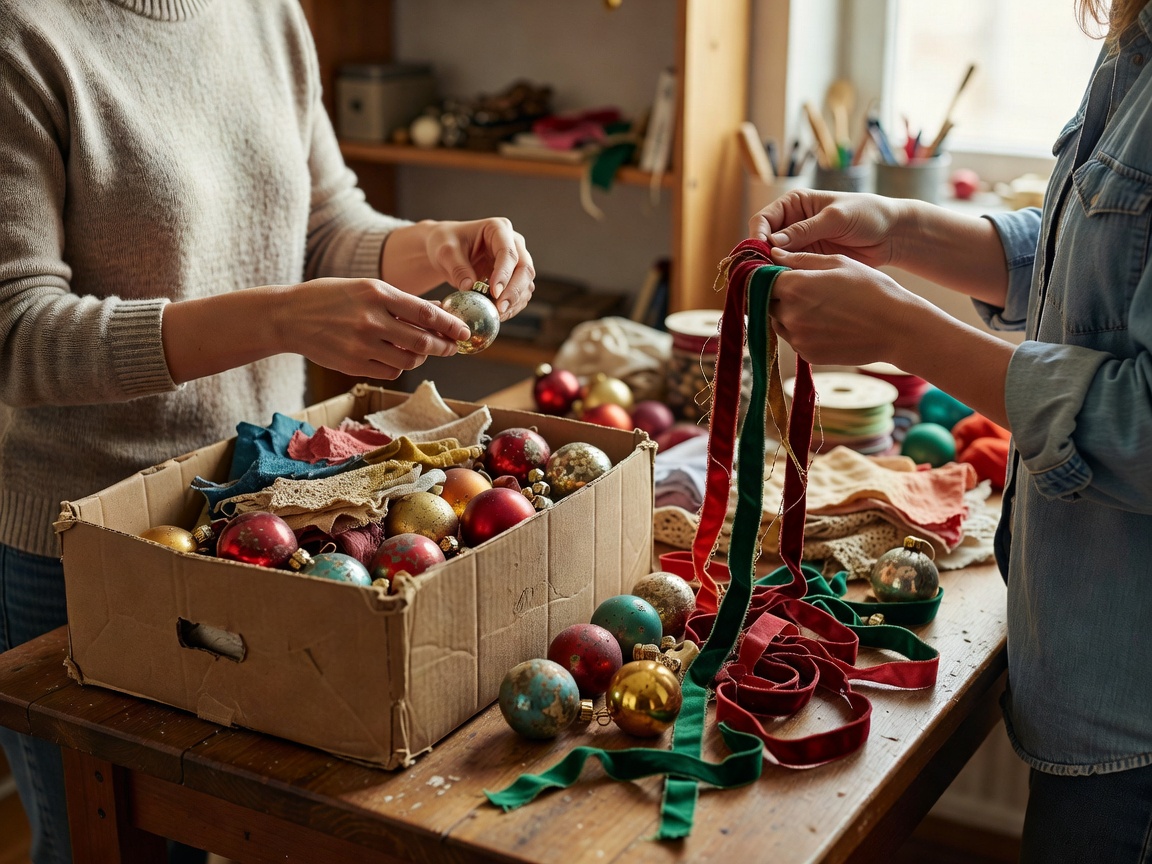
Start a box in November. Clean glass jars with lids, cardboard tubes, wine corks, single earrings, old knitwear, shirts with good fabric, broken bead necklaces and last year's ribbons all qualify. Ask family members to save interesting packaging. A charity shop visit can fill gaps cheaply, but check what you have first.
When refreshing older baubles, be careful with genuine antiques. Vintage mercury glass and early hand-painted ornaments have value and character as they are; repurpose only plain modern pieces. A tired plastic bauble can be wrapped in yarn, covered with fabric scraps glued in patchwork, or decoupaged with cut-up cards.
Project: a glowing jar lantern
Usable instructionsSupplies
- Clean glass jars, labels soaked off in warm soapy water
- Tracing or baking paper and dark paper or card
- Pencil, scissors and PVA glue diluted 2:1 with water
- A soft brush, twine and battery LED tealights
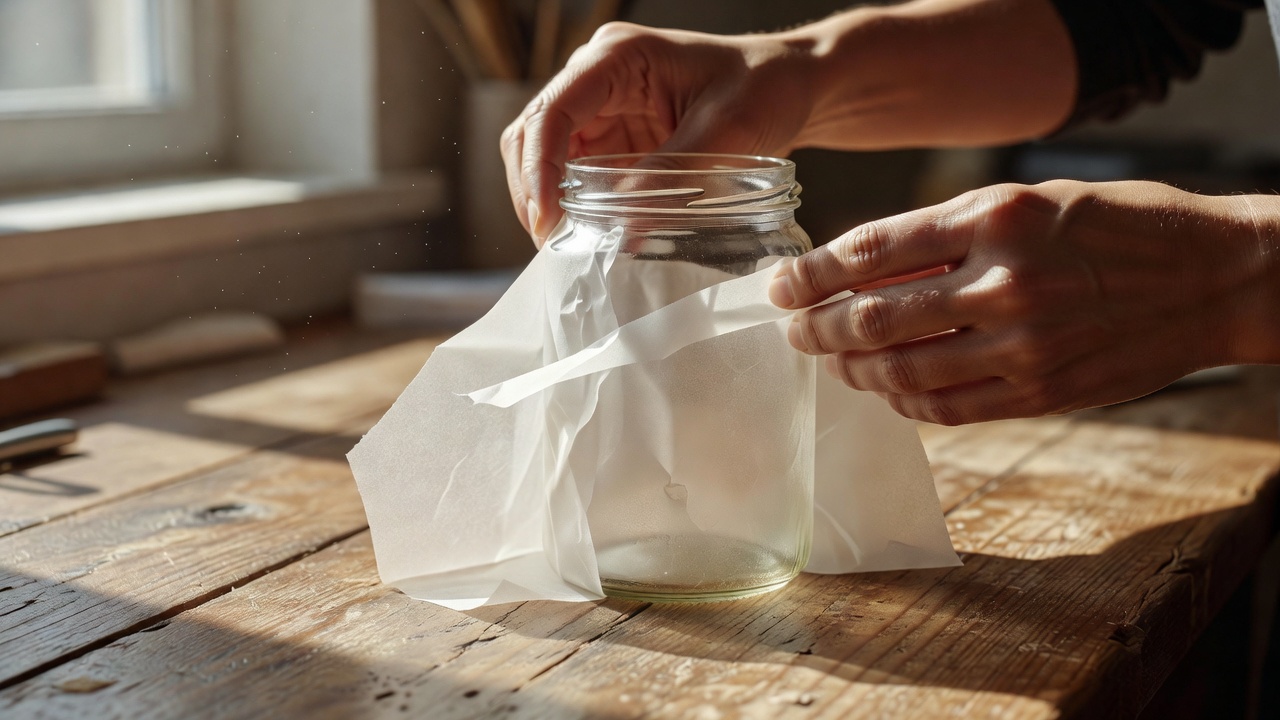
- Wash and dry the jar thoroughly. Any grease will stop the paper sticking evenly.
- Measure around the jar with string and cut tracing or baking paper to that length plus 1 cm overlap.
- Draw a simple winter skyline on dark card: fir trees, rooftops or a hill of houses. Keep shapes chunky so they cut cleanly.
- Cut out the silhouette strip, matching the jar's circumference.
- Brush diluted PVA lightly over the jar, wrap the tracing paper around it and smooth out bubbles from the centre outwards.
- Brush a little glue onto the back of the silhouette and press it around the base of the jar.
- Let it dry for an hour, then wind twine several times around the neck and tie a bow.
- Place an LED tealight inside. The frosted paper diffuses the glow and the silhouette stands out sharply.
Furoshiki-style fabric wrapping
Cut a square from an old shirt, scarf or tablecloth, around three times the width of your gift. Place the gift diagonally in the centre, fold two opposite corners over it, then tie the remaining two corners in a square knot on top. Tuck a sprig of rosemary or a paper star into the knot. The cloth becomes part of the present and can be wrapped again next year.
Storing reused pieces
Wrap lanterns in tissue and stand them upright in a divided wine box. Fold fabric wraps flat with a sachet of dried lavender. Keep a small "spares" tin of buttons, ribbons and offcuts so repairs next December take minutes.
Troubleshooting
The tracing paper wrinkled as it dried.
The glue was too wet. Use a thinner coat and smooth gently with a dry brush rather than your fingers.
Sticky label residue will not come off.
Rub a little cooking oil into the residue, leave for ten minutes, then wash with hot soapy water.
My fabric wrap keeps slipping open.
Use a lightweight cotton rather than a slippery synthetic, and make the square slightly larger so the knot has more fabric.